
LISTENING
Mostly on the phone
In Ofcom's research, 64% of podcast listeners say a mobile phone is their main way of listening, far ahead of laptops (13%) and TVs (10%).
Who listens?
PODCASTS, BY THE NUMBERS
39% listen monthly
AI-generated image, not a photograph of a real person or place.
Podcasts have become an everyday habit.
Ofcom's research shows monthly listening has more than doubled since 2019, mostly on mobile phones. And making a show needs less kit than most people think: a quiet room, a microphone and a little care.
THE SHORT ANSWER
Ofcom tracks how the UK listens.
University guides explain how to record cleanly.
LISTENING
In Ofcom's research, 64% of podcast listeners say a mobile phone is their main way of listening, far ahead of laptops (13%) and TVs (10%).
Who listens?MICROPHONE
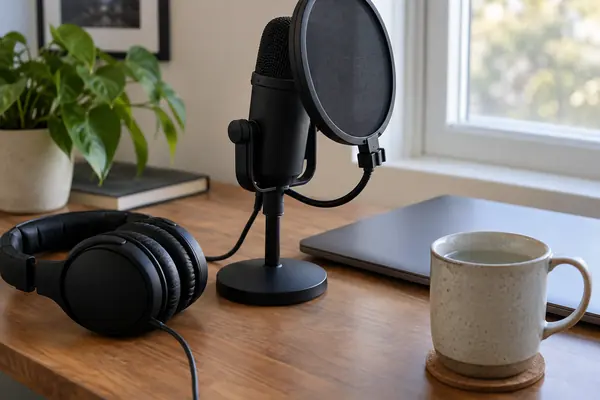
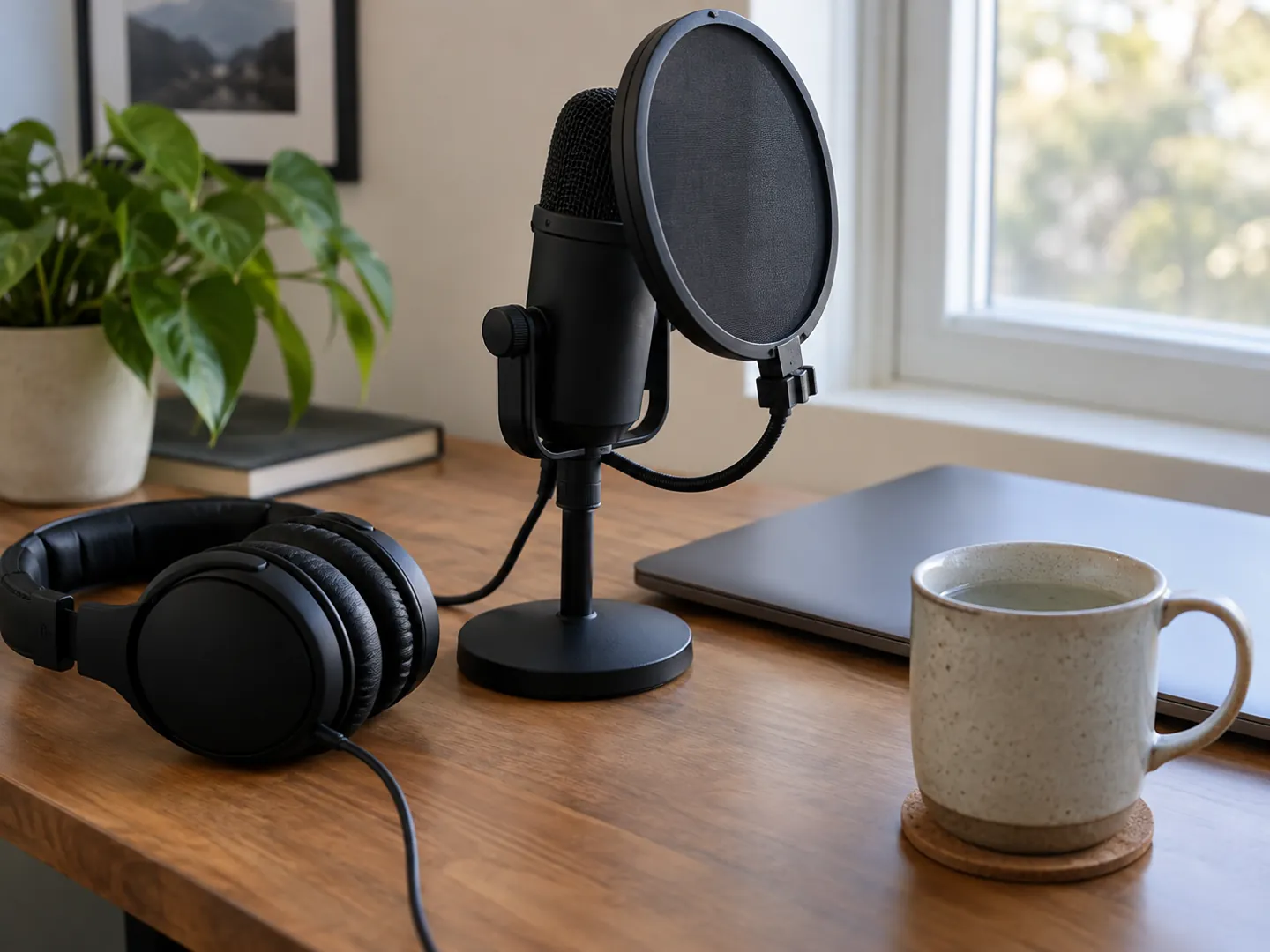
University guides suggest keeping your mouth 6 to 12 inches from the microphone, with a pop filter about half way, to avoid pops and breath noise.
Recording stepsTHE ROOM
A small room with carpet and soft furnishings echoes less than tile, glass or brick. Keep away from fridges, dishwashers and traffic.
Room tips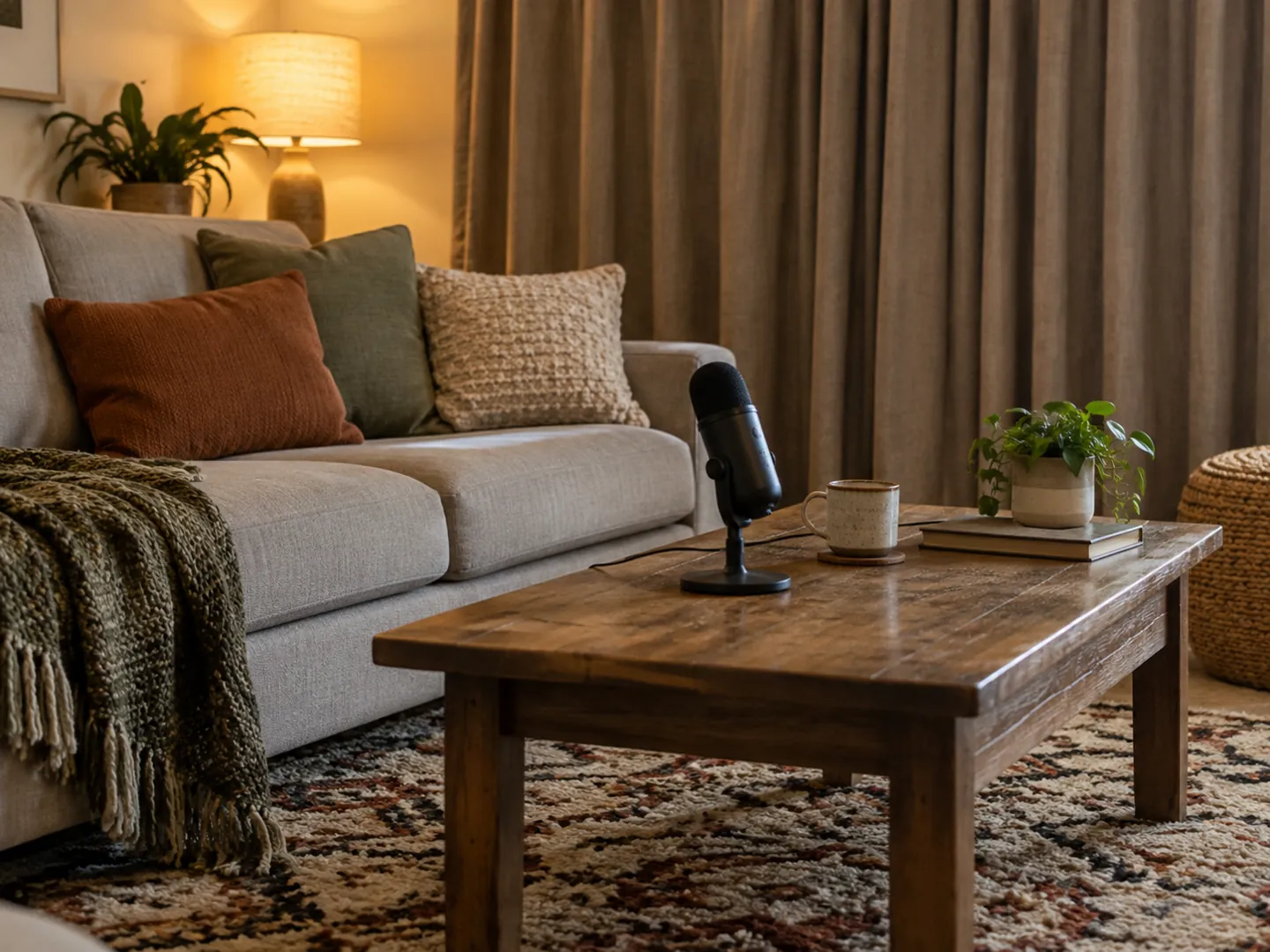
FOUR STEPS BEFORE YOU HIT RECORD
These tips come from university library podcast guides. None needs a studio, just a little preparation.
Make a short test of your empty room. You will hear hums and noises you have stopped noticing.
Keep your mouth 6 to 12 inches from the mic, and keep that distance the same throughout.
Speak a test line. The meter should sit just below the red and never peak into it.
Monitor as you record, then listen back before you go further, so problems are caught early.
TWO NUMBERS WORTH KNOWING
One figure on reach,
one on the share of listening time.
39%
UK adults listening to podcasts monthly
Up from 18% in 2019, according to Ofcom's Media Nations research. Including video podcasts the figure is 43%, and 27% of UK adults listen every week.
MONTHLY REACH · OFCOM
11%
Share of listening time spent on podcasts
Ofcom says the proportion of people's listening time given to podcasts more than doubled, from 5% in 2022 to 11% in 2026.
LISTENING TIME · OFCOM
Ofcom also found that 68% of podcast listeners listen to podcasts that also have videos, and 45% say there are too many adverts on the podcasts they listen to.
A QUICK AUDIENCE CHECK
Pick a group to see what share listens to podcasts weekly, from Ofcom's 2025 Audio and Podcast Surveys. The bar shows how widespread weekly listening is in that group.
Figures from Ofcom's May 2025 summary of its annual Audio and Podcast Surveys.
THE ROOM MATTERS
Every room sounds different: carpet, ceiling height and windows all change it. Guides advise recording every part of a show in the same room so it sounds consistent.
Pick the smallest, softest space you have, away from fridges, heating systems, laundry and traffic, and even your laptop's fan. For quality, record uncompressed WAV files rather than MP3s.
In conversation
Ofcom's Media Nations research found 39% of people listen monthly, up from 18% in 2019, and 27% of UK adults listen every week.
Among weekly listeners, Ofcom found news and current affairs is the most popular genre (47%), followed by entertainment (44%), comedy (41%) and discussion and talk shows (40%).
No. University guides say a podcast can be made with a computer's built-in microphone, though a separate microphone and an audio interface or recorder will sound much better.
Guides suggest 6 to 12 inches, or about 8 inches, with a pop filter roughly half way between your mouth and the mic. Keep the distance consistent.
One university guide recommends recording WAV files at 16-bit, 48 kHz, and not MP3s or other compressed audio.
Each figure on this page comes from the sources below.
ABOUT THIS NAME
doodlecaster.com is part of the DoodleSale portfolio. It isn't in an auction right now, but you can ask about leasing it.